| Whale Fall 101 |
| Stage 1 |
| Stage 2 |
| Stage 3 |
| Stage 4 |
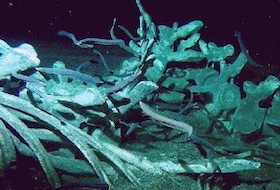
Enrichment Opportunist Phase!
Length: months - 5 years
Once the flesh of a whale has been stripped to just bone and bits of flesh smaller creatures make their
homes in the bone and surrounding sediment of whale carcasses and munch on the bits of flesh, bones and
enriched sediment. A year later the scientists returned to the Davidson seamount whale fall and the signs
of the Enrichment Opportunist Phase were still in effect even as the whale had further disintegrated and
decayed.
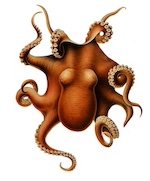
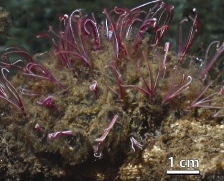
By now the whale is home to smaller fish, eels, Muusoctopus (a type of deep sea octopus), crabs and worms.
This is where you start to see Osedax, a genus of bone eating worm that carpets the bones and eats the
nutrients inside of them that gets broken down by bacteria. Surrounding the ground of the decomposing whale
is usually a carpet of worms and bacteria that continue to break down the nutrients that seeped into the
soil. These worms on whale falls are of particular interest to scientists as some species have been
discovered as only being found on these concentrated whale fall ecosystems.
The Opportunists!
How these organisms move between whale falls to sustain themselves is still unknown to this day.
Once the smaller scavengers have had their fill and the whale's bones are stripped it officially moves onto the next stage of decomposition..
Version 1.00.00