| Whale Fall 101 |
| Stage 1 |
| Stage 2 |
| Stage 3 |
| Stage 4 |

Reef Stage!
Length: Unknown...
Whale falls weren't able to be studied until the 1980s due to advancements in deep sea robotic technology
leaving the long term trajectory of whale decomposition to be largely theorized. While the first 3 are
supported by the scientific community as core stages, the Reef Stage is still debated as not every whale
carcass will reach it and its length is unknown.
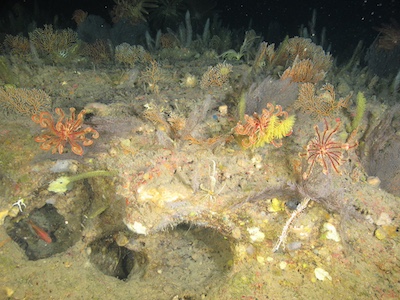
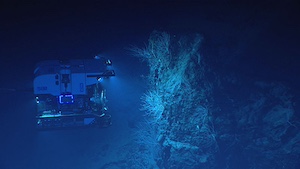
When a whale has had all its organic components broken down, all that's left of a whale is the pure mineral
content of its bones. It is believed that these solid structures make the perfect home for suspension and
filter feeders of the deep to latch onto such as corals and sponges. As the sediment of the deep sea makes
for uneven ground for organisms that filter through the water for nutrients. Luckily the stripped and solid
surface of the vertebrate of a whale tail could be the perfect spot for one to hold onto and make a home.
Instead of creating traditional coral reefs its theorized they support patches of deep sea coral mounds.
Filter Feeders!
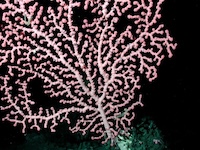
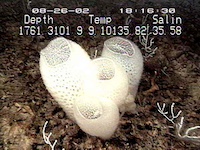
Even devoid of any organic matter, whales could continue to support life on earth. No other creature has an impact like this on the deep sea with other species of large sea creatures only making it to the mobile scavenger stage, this ecological succession and the ecosystems it creates are truly unique.
Version 1.00.00